How to choose an electric car
Choosing an electric car doesn’t have to be complicated. Understanding your driving habits, charging options, battery range and budget can help you find an EV that suits your lifestyle.
Follow our simple guide to compare electric vehicles, understand running costs and discover which EV is right for you.
Modern electric cars offer ample range for daily driving and longer journeys today.
Learn more about EV range
Get to know the technology that powers electric vehicles, from battery capacity and range to charging and long-term performance.
Learn more about EV batteriesWhether you charge at home or on the go, keeping your electric car powered is simple and convenient.
Explore EV charging optionsDriving style, road conditions and weather can affect how far your EV will go.
Compare electric vs petrol costs
Understanding electric car batteries
The battery is one of the most important components of an electric vehicle. Knowing a few key battery terms can make comparing EVs much easier.
| Term | Description |
|---|---|
| Lithium-Ion (Li-Ion) | The most common battery technology used in electric vehicles, offering a balance of performance, driving range and long-term durability. |
| Battery Capacity (kWh) | Measured in kilowatt-hours (kWh), battery capacity shows how much energy an EV battery can store. Larger batteries typically provide a longer driving range. |
| Charging Speed | Charging speeds vary depending on the vehicle and charger. Rapid chargers can add hundreds of miles of range in under an hour. |
| Battery Health | Like all rechargeable batteries, EV batteries gradually lose capacity over time. Modern EV batteries are designed to retain strong performance for many years. |
How long do EV batteries last?
Most EV batteries are expected to last 15-20 years and retain the majority of their original capacity over that time, with many backed by warranties of at least 8 years or 100,000 miles*.
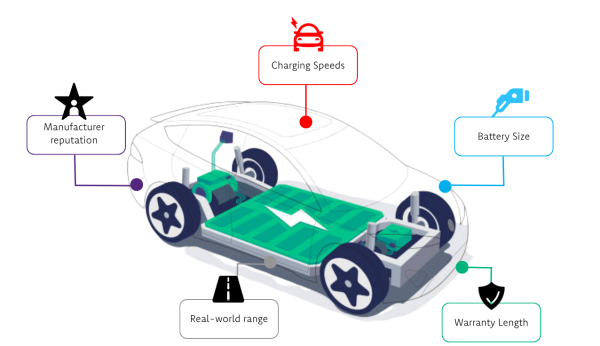
Things to consider:
- Battery warranty length
- Battery size
- Charging speeds
- Real-world range
- Manufacturer reputation
*Source: rac.co.uk
How much EV range do you really need?
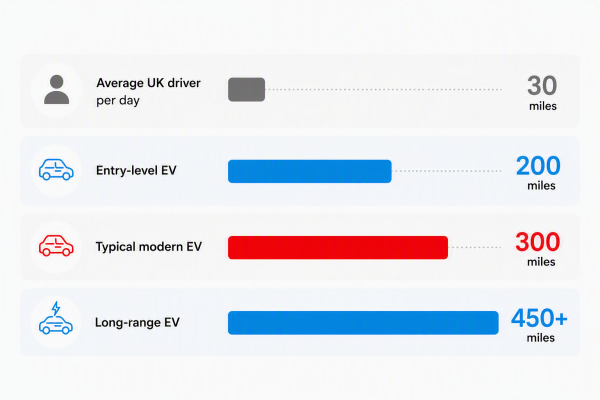
Modern electric cars offer more than enough range for most daily driving and many longer journeys. Rather than focusing on the largest battery available, it’s important to choose a range that matches how you actually drive.
When comparing electric cars, consider your typical mileage, whether you regularly drive on motorways and how often you can charge.
What affects EV range?
Real-world range can vary depending on:
Using more energy and can reduce range. Maintaining a steady speed can help improve efficiency.
Pre-conditioning and keeping the battery between 20-80% charge can help minimise impact.
Using these efficiently can help preserve battery performance.
A smoother driving style can help maximise range.
Reducing unnecessary load can help improve efficiency.
Find the right electric car for you
Answer a few quick questions about your driving habits, mileage and access to EV charging to discover which electric cars suit you best.
Start Quiz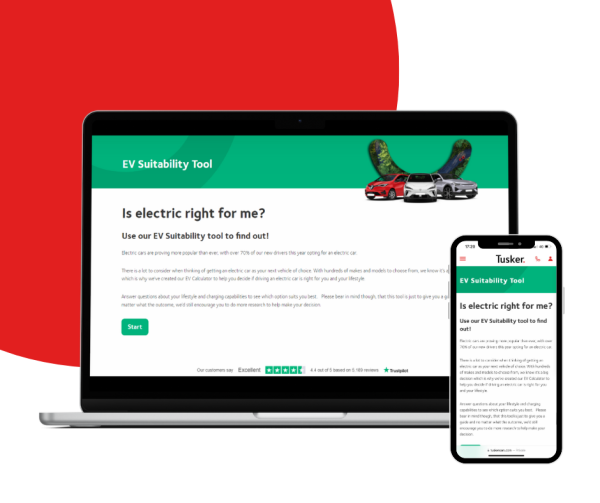
Cost of electric cars
Compare the costs of electric, petrol and hybrid cars to see how much you could save by switching to an EV.